
Earth Hour, observed annually on the last Saturday of March, is the world's largest grassroots environmental movement — a global moment when individuals, businesses, and cities turn off non-essential lights for one hour to signal their commitment to a sustainable future. Founded in Sydney in 2007, it now reaches over 190 countries and territories.
For organisations, Earth Hour is far more than a symbolic switch-off. It's an invitation to examine the company's environmental footprint, engage employees in sustainability, and demonstrate through action — not just policy language — that the organisation takes its environmental responsibilities seriously.
"Switching off the lights for one hour signals something more important than the energy saved: that your organisation is willing to be counted among those who take the planet seriously."
Organising Meaningful Earth Hour Initiatives
Participate in the Switch-Off
Turn off non-essential lights, screens, and appliances in your office during the official Earth Hour window (8:30–9:30pm, last Saturday of March). Make it an event — invite employees to gather by candlelight or gather outdoors, turning a simple gesture into a shared experience that generates genuine conversation about sustainability.
Organise a Volunteering Day
Extend the commitment beyond one hour with a team volunteering day — cleaning up a local park, beach, or green space in the UAE; planting trees in a community garden; or participating in a recycling drive. Shared purpose in a physical environment creates the kind of team cohesion that internal meetings rarely generate.
Launch a Sustainability Pledge
Invite employees to make one personal or professional sustainability commitment — reducing single-use plastics, switching to digital-only documents, or committing to public transport one day per week. Pair visible pledges (displayed on a board or internal channel) with sustainable branded merchandise as recognition for participation.
Branded merchandise that walks the sustainability talk
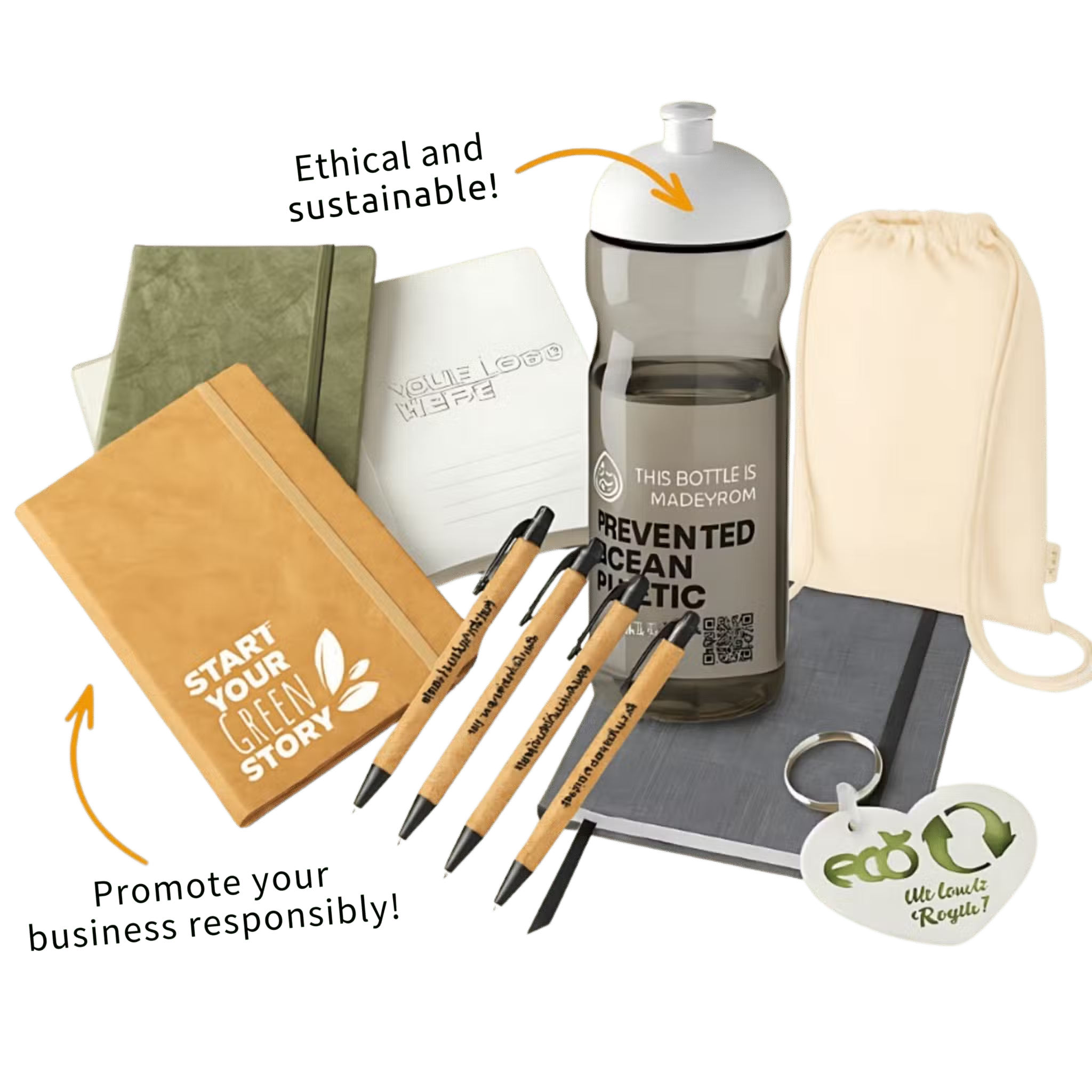
Eco-friendly branded products made from sustainable materials. Free design tools. No minimums.
Sustainable Branded Merchandise
The most resonant Earth Hour merchandise is merchandise that embodies the values it represents — made sustainably, built to last, and designed to replace single-use alternatives rather than add to them.
Organic or Recycled Apparel
Branded t-shirts or tees made from organic cotton or recycled materials — worn daily, extending your brand and your values into the community simultaneously.
Reusable Water Bottles
A high-quality insulated branded bottle directly replaces hundreds of single-use plastic bottles per year — the highest environmental return of any branded merchandise category.
Eco-Friendly Tote Bags
A quality reusable tote replaces plastic carrier bags indefinitely — a practical, visible, and daily-use gift that carries your brand into the community on every trip to the market or office.
Recycled Paper Notebooks
Branded notebooks made from recycled or FSC-certified paper — paired with the sustainability pledge initiative, every note taken becomes part of the commitment.
Embracing Cultural Sensitivity
In the Middle Eastern context, sustainability carries particular urgency — the UAE operates in one of the world's most water-scarce and energy-intensive climates, making environmental responsibility locally felt rather than abstractly global. A few ways to make Earth Hour resonate authentically with your team:
- Ground it in local stakes — Frame sustainability initiatives around the UAE's specific environmental context: water scarcity, extreme heat, and the UAE Net Zero 2050 targets — making the commitment feel locally relevant, not imported from cooler climates.
- Arabic Calligraphy — Incorporate traditional scripts or Arabic-language sustainability messaging on merchandise and communications, grounding the initiative in the region's own aesthetic and values.
- Outdoor activities with Ramadan awareness — When Earth Hour falls during Ramadan (as it often does), schedule volunteering activities for early morning or after iftar rather than midday, ensuring fasting employees can fully participate.
- Substance over gesture — The most credible Earth Hour participation comes from organisations that pair the switch-off with a genuine, measurable sustainability commitment — a reduction target, a policy change, or a procurement standard.
Final Thoughts
Earth Hour is more than one hour in the dark — it's a commitment to being counted among the organisations that take environmental responsibility seriously. Through meaningful team activities, sustainable branded merchandise, and culturally grounded choices, you build a workplace where that commitment is visible, shared, and real.
At Merchlist, we're dedicated to helping you craft sustainable initiatives and provide merchandise that reflects your company's values. Browse our eco-friendly merchandise or book a free meeting to get started.




 Best Sellers
 New Arrivals
 Tshirts & Polos
 Hoodies & Jackets
 Jerseys & Sportswear
 Uniforms & Workwear
 Bottles & Mugs
 Caps & Hats
 Bags
 Office
 Boxes & Packaging
 Travel & Tech
 Corporate Gifting
 Home & Wellness
 Printing Materials
 Eco-friendly
 Promotional Giveaways
 Pants & Shorts
 Pet Merch
 Kids & School

 Business Cards

 Food & Candy